Difference Between Sealed Flexible Conduit Connector and Flexible Gland

Difference Between Sealed Flexible Conduit Connector and Flexible Gland

Difference Between Sealed Flexible Conduit Connector and Flexible Gland

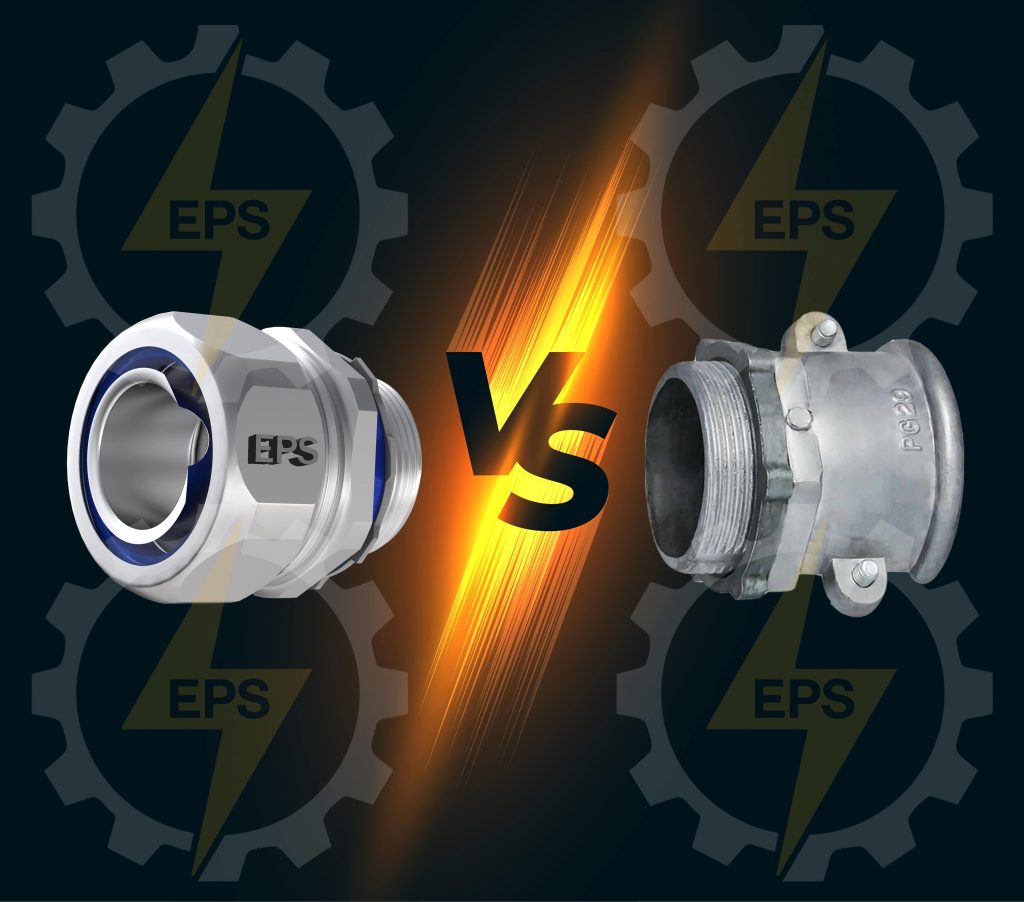
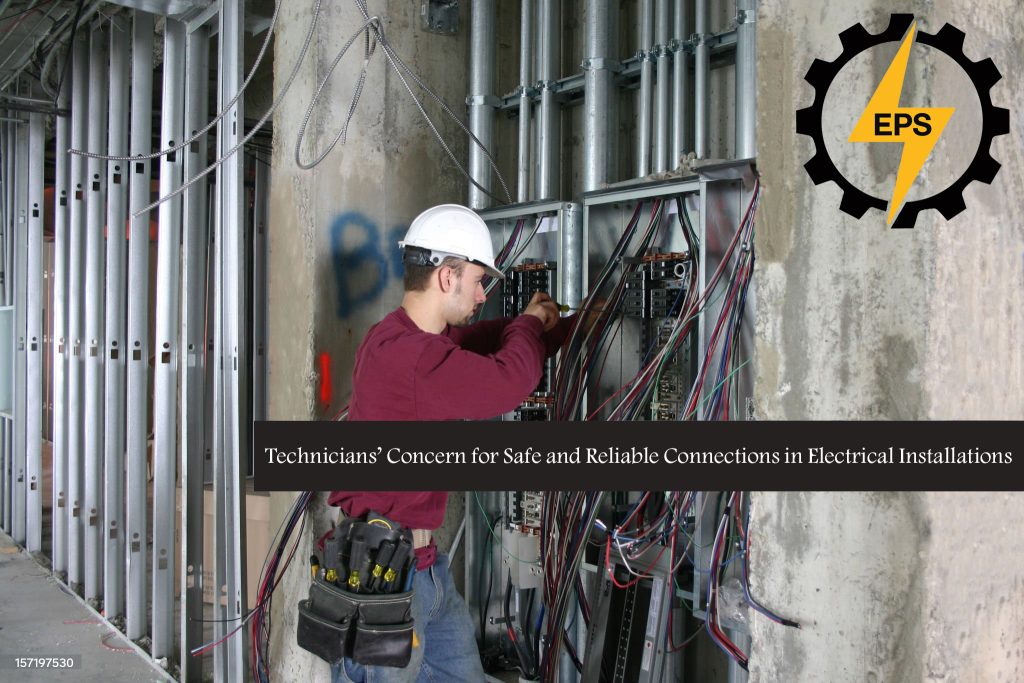
In industrial electrical projects, one of the main concerns for technicians and engineers is ensuring a safe and reliable connection of flexible conduit to electrical equipment such as electrical panels, junction boxes, machines, or enclosures. Two commonly used components for this purpose are the sealed flexible conduit connector and the flexible gland (single-screw and double-screw types).

But the key question is:
Which one is more suitable for your project?

Do you need a high-quality product with complete sealing and dust protection, or will a simple, economical connection suffice?

In this article, by carefully examining the differences between these two types of connections, we guide you to choose the best option based on environmental conditions and application requirements.

Selecting the appropriate fittings for flexible conduit

What is a Flexible Gland?

A flexible gland is a widely used fitting in electrical wiring systems, designed to connect flexible conduits onto the body of electrical panels, junction boxes, or electrical equipment. This component somewhat restricts movement, pulling, and excessive bending of the flexible conduit at the connection point.

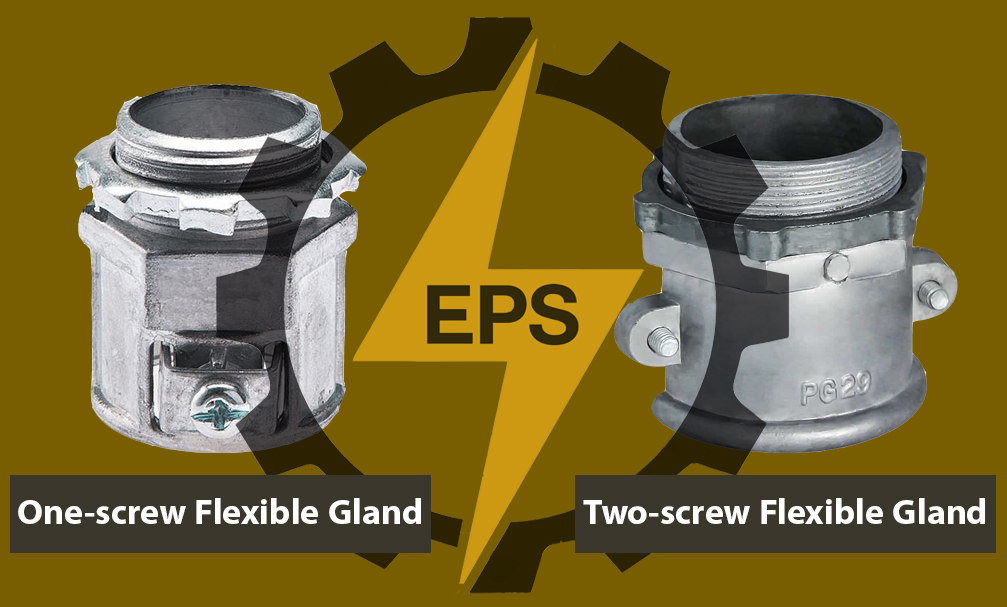
Flexible glands come in various types, but in the Iranian market, two models are most common: single-screw gland and double-screw gland. Generally, both serve the same function. Their advantages and differences will be detailed below.

Comparison of Single-Screw vs. Double-Screw Flexible Glands

  • Both are made of Aluminum material.
  • Single-screw glands provide greater resistance against pulling and loosening compared to double-screw glands.
  • Neither provides any sealing against dust or moisture ingress.
  • The single-screw gland is priced higher than the double-screw gland.
Difference Between Single-Screw and Double-Screw Flexible Glands

Conclusion:

Flexi glands are an economical option for connecting flexible conduits but are not suitable for projects requiring sealing, enhanced safety, or long service life.

Now that we are familiar with the different types of flexible glands and their features, let’s take a closer look at a more advanced and durable option known as the flexible connector.

What is a Sealed Flexible Conduit Connector?

When it comes to a fully safe and industrial-grade connection of flexible conduit, something beyond a gland is needed; this is where the sealed flexible conduit connector comes into play.

A sealed flexible conduit connector is a robust metallic component designed to connect flexible conduit to electrical panel bodies, junction boxes, or industrial equipment with maximum protection against water, dust, and mechanical stresses.

Key Features of Flexible Conduit Connectors:

  • Metal body (Zamak / Aluminum alloy) for impact and heat resistance
  • Galvanized plating for corrosion protection
  • Sealing washer to prevent water, moisture, and dust ingress
  • High protection rating up to IP66 for outdoor, humid, and hazardous environments
  • Precision-engineered threads and standard sizes for secure connection
  • Suitable for metallic flexible conduit, jacketed, and shielded types
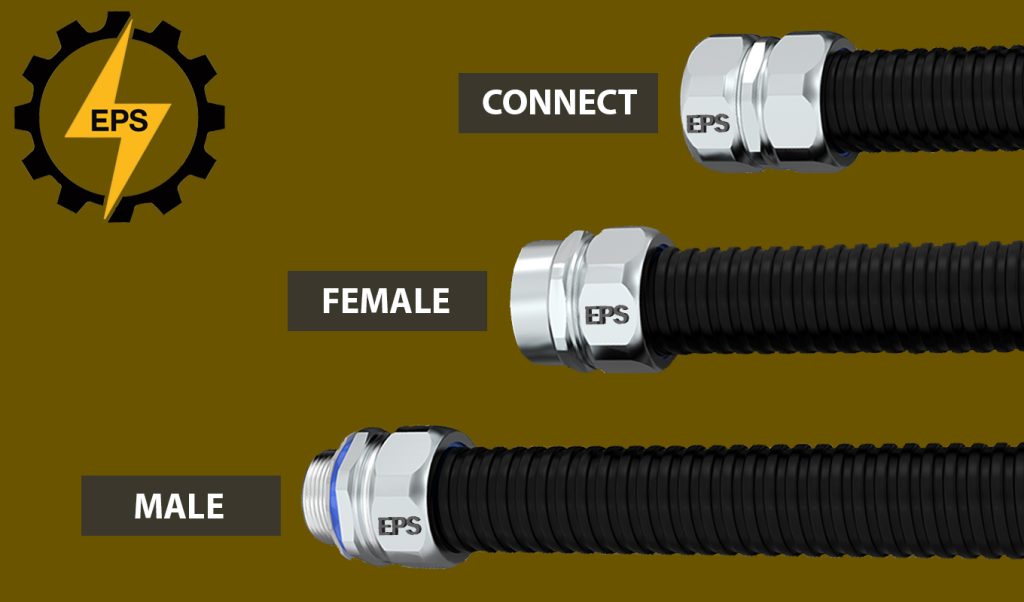
  • Male (threaded) connectors installable on metal/plastic boxes and electrical panels using thread and locknut
  • Female (internal-threaded) connectors installable on steel conduit and rigid conduit
  • Coupler connectors for joining two flexible conduits together
  • Usable in wet environments
  • Easy and quick installation
  • Resistant to pulling forces
Types of Flexible Conduit Connectors

Conclusion:

Unlike flexible glands, which are mainly used for light and non-industrial applications, sealed flexible conduit connectors are engineered for harsh and industrial environments. They provide not only greater safety but also protect your electrical equipment against harsh environmental factors.

Flexible Gland vs. Flexible Connector Comparison Table

Now that we are familiar with both types of fittings, it’s time to compare them in detail and in terms of practical application to determine which one is the better option under specific conditions?

Sealed Flexible Conduit Connector

  • High sealing level preventing moisture and dust ingress
  • Corrosion and chemical resistance (galvanized coating)
  • Suitable for industrial (Safe) and non-industrial environments
  • Higher price
  • Easy installation
  • Impact resistant (secure fixation)
  • Resistant to conduit pull-out (has a grip insert preventing conduit from slipping out)

Specification Table for Flexible Conduit Connectors

Flexible Gland

  • No sealing capability
  • No protective coating
  • Suitable only for non-industrial environments without safety requirements
  • Lower price
  • Easy installation
  • No impact resistance (can become loose)
  • No resistance to conduit pull-out (no insert to hold conduit inside)
Specification Table for Flexible Conduit Glands

Summary:

As you can see, the only advantage of glands over connectors is lower cost. However, connectors offer complete sealing, mechanical robustness, long lifespan, and reliable performance in industrial and humid conditions, making them a far more professional and dependable choice for projects where security and durability are priorities.

However, in situations where a project faces budget constraints while still requiring a secure and high-quality connection, should the advantages of flexible connectors be ignored?
Absolutely not.
Fortunately, ElectroPersian Sepahan (EPS) has introduced an innovative solution to address this challenge:

Electro Persian Sepahan (EPS) Smart Innovation

Connector quality with single-screw gland pricing

In situations where choosing between the high quality of sealed flexible conduit connectors and the economical price of flexible glands has always been a challenge for industrial projects, ElectroPersian Sepahan (EPS) has taken an innovative step by leveraging advanced engineering, materials technology, and quality control tailored for industrial needs.

By designing and manufacturing a flexible connector made from a proprietary industrial aluminum alloy, we have successfully created a product that retains all the technical features of a professional connector, such as:

  • Complete sealing up to IP66
  • Mechanical resistance against impact, vibration, and corrosion
  • Pull-out resistance (secure conduit fixation)
  • Fully safe and stable connection
Innovation in the Production of Flexible Conduit Connectors

but with a more economical design, pricing it close to single-screw glands.

This means, for the first time, engineers and industrial contractors can enjoy the performance, durability, and standards of a true industrial connector without paying a premium with no compromises on quality or safety.

For more details, you can refer to the article on Aluminum Sealed Flexible Conduit Connectors.

If you’re still unsure which option best suits your project, the technical team at Electro Persian Sepahan is ready to consult and assist you. Contact us to get the best solution tailored for your project’s specific needs.

Share this article

Post a comment

Your email address will not be published.

thirteen + one =